What Is VPS Hosting? A Complete Beginner’s Guide
If you've been researching web hosting, you've probably come across the term VPS Hosting. It often appears as the next step after shared hosting and before dedicated servers. Hosting providers frequently recommend VPS plans for growing websites, online stores, and businesses that need more power and flexibility.
Over the years, VPS hosting has become one of the most popular hosting solutions because it offers an ideal balance between affordability, performance, and scalability. It provides many of the benefits of a dedicated server while remaining accessible to small businesses, developers, and growing websites.
But what exactly is VPS hosting? How does it work? Is it worth the extra cost? And how do you know when it's time to upgrade?
In this complete beginner's guide, we'll explain everything you need to know about VPS hosting in plain English. By the end, you'll understand how VPS hosting works, who it is for, and whether it's the right choice for your website.
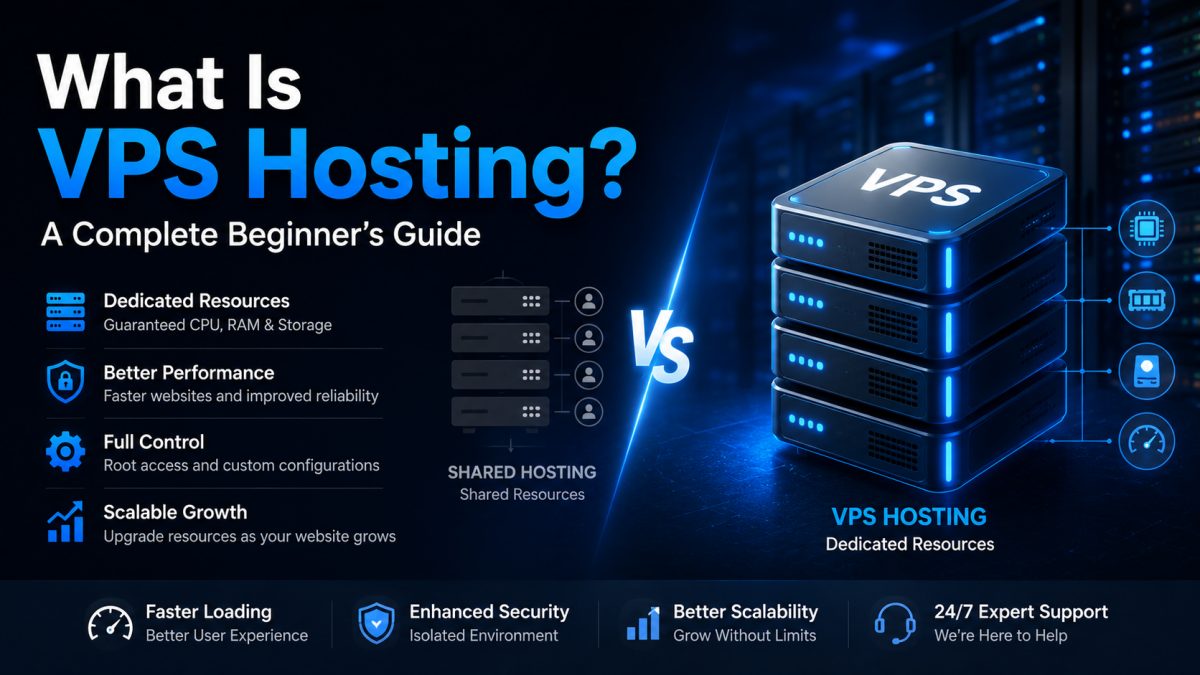
What Is VPS Hosting?
VPS stands for Virtual Private Server.
A VPS is a virtualized server that acts like a dedicated server, even though it shares physical hardware with other VPS instances.
Think of a large apartment building.
In shared hosting, everyone lives in one giant room and shares everything. If one person makes a mess or uses too many resources, everyone is affected.
With VPS hosting, each tenant gets their own private apartment. The building is still shared, but everyone has dedicated space, resources, and more control.
That's essentially how VPS hosting works.
How Does VPS Hosting Work?
A physical server can be divided into multiple virtual servers using virtualization technology.
Each virtual server receives its own:
- CPU resources
- RAM allocation
- Disk storage
- Operating system
- Root access
Even though multiple VPS accounts run on the same physical machine, they operate independently.
This means your website is far less affected by other users compared to traditional shared hosting.
The virtualization layer acts as a barrier, isolating each VPS environment from the others.
Why Was VPS Hosting Created?
In the early days of web hosting, website owners had only two choices:
- Shared hosting
- Dedicated servers
Shared hosting was affordable but limited.
Dedicated servers were powerful but expensive.
VPS hosting was introduced as the perfect middle ground.
It combines many of the benefits of dedicated hosting with a much lower price tag.
Today, VPS hosting is one of the most popular hosting solutions for businesses and growing websites.
Shared Hosting vs VPS Hosting
One of the most common questions beginners ask is:
What's the difference between Shared Hosting and VPS Hosting?
Shared Hosting
- Lowest cost
- Easy to use
- Limited resources
- Shared environment
- Less control
VPS Hosting
- Dedicated resources
- Better performance
- More security
- Greater flexibility
- Root access available
Imagine driving a bus versus owning your own car.
Shared hosting is like public transportation. It's cheap and practical, but you're sharing space and dealing with limitations.
VPS hosting is your own vehicle. You have more freedom, better performance, and complete control over the journey.
VPS Hosting vs Dedicated Servers
Another common comparison is VPS versus dedicated hosting.
Dedicated Server
- Entire physical server
- Maximum resources
- Highest performance
- Most expensive option
VPS Hosting
- Virtual server
- Dedicated resources
- Lower cost
- Excellent scalability
For many businesses, VPS hosting offers more than enough power without the cost of a dedicated server.
The Biggest Benefits of VPS Hosting
1. Better Performance
Performance is one of the main reasons people upgrade to VPS hosting.
With shared hosting, your website competes with hundreds of other websites for server resources.
On a VPS, resources are allocated specifically to your account.
This results in:
- Faster page loading
- Better server response times
- More consistent performance
- Improved user experience
2. Increased Reliability
Reliability matters.
If another user on a shared server experiences a traffic spike, your website may slow down.
With VPS hosting, this problem is largely eliminated.
Your resources remain available regardless of what other VPS users are doing.
This often translates into better uptime and stability.
3. Enhanced Security
Security is another major advantage.
Each VPS operates in an isolated environment.
This separation helps reduce risks associated with neighboring websites.
Many VPS users also install:
- Custom firewalls
- Security monitoring tools
- Advanced malware protection
This gives website owners more control over their security strategy.
4. Full Root Access
One of the most exciting features of VPS hosting is root access.
Root access allows you to:
- Install custom software
- Modify server settings
- Create custom configurations
- Manage services directly
This level of control simply isn't available with traditional shared hosting.
5. Scalability
Growing websites need room to grow.
One of the biggest strengths of VPS hosting is scalability.
You can often upgrade:
- RAM
- CPU cores
- Storage
- Bandwidth
without migrating to a completely different hosting environment.
This makes VPS hosting ideal for growing businesses.
Who Should Use VPS Hosting?
VPS hosting isn't necessary for every website.
However, it can be the perfect solution for:
- Growing blogs
- Business websites
- Online stores
- Web applications
- Agencies
- Developers
- Membership websites
- Learning management systems
If your website receives consistent traffic or performs complex tasks, VPS hosting is often worth considering.
Common VPS Hosting Use Cases
WordPress Websites
Many WordPress websites eventually outgrow shared hosting.
As traffic increases and plugins become more resource-intensive, a VPS can provide the performance needed to maintain a fast user experience.
Online Stores
eCommerce websites rely heavily on databases, product searches, shopping carts, and payment systems.
VPS hosting helps ensure smooth performance during busy periods.
Multiple Websites
If you manage multiple websites, VPS hosting allows you to host them efficiently under one powerful environment.
Development Environments
Developers often use VPS hosting for testing, staging, and custom applications.
What Is Managed VPS Hosting?
Many beginners worry that VPS hosting is too technical.
This is where managed VPS hosting comes in.
With managed VPS hosting, the hosting provider handles many server administration tasks, including:
- Security updates
- Operating system updates
- Monitoring
- Technical maintenance
This allows users to enjoy VPS benefits without becoming system administrators.
Best Web Hosting https://besthostingcom.duoservers.com/ Shared Hosting, VPS Hosting, Dedicated Servers
Tags: kvm vps, managed vps hosting, openvz vps, shared hosting vs vps, virtual private server, VPS hosting, vps hosting guide, web hosting, website hosting, what is vps hosting


