SSD vs HDD Hosting: Is SSD Really Faster?
When searching for web hosting, you’ve probably seen hosting companies proudly advertise SSD Hosting as a major advantage. Faster speeds, better performance, improved reliability — these claims appear everywhere.
But what does it actually mean?
Is SSD hosting really faster than traditional HDD hosting? Does it make a noticeable difference for websites? And most importantly — is it worth paying extra for?
In this complete guide, we’ll explain everything you need to know about SSD vs HDD hosting in simple, practical terms. Whether you're launching a personal blog, an eCommerce store, or a business website, understanding storage technology can help you make a smarter hosting decision.
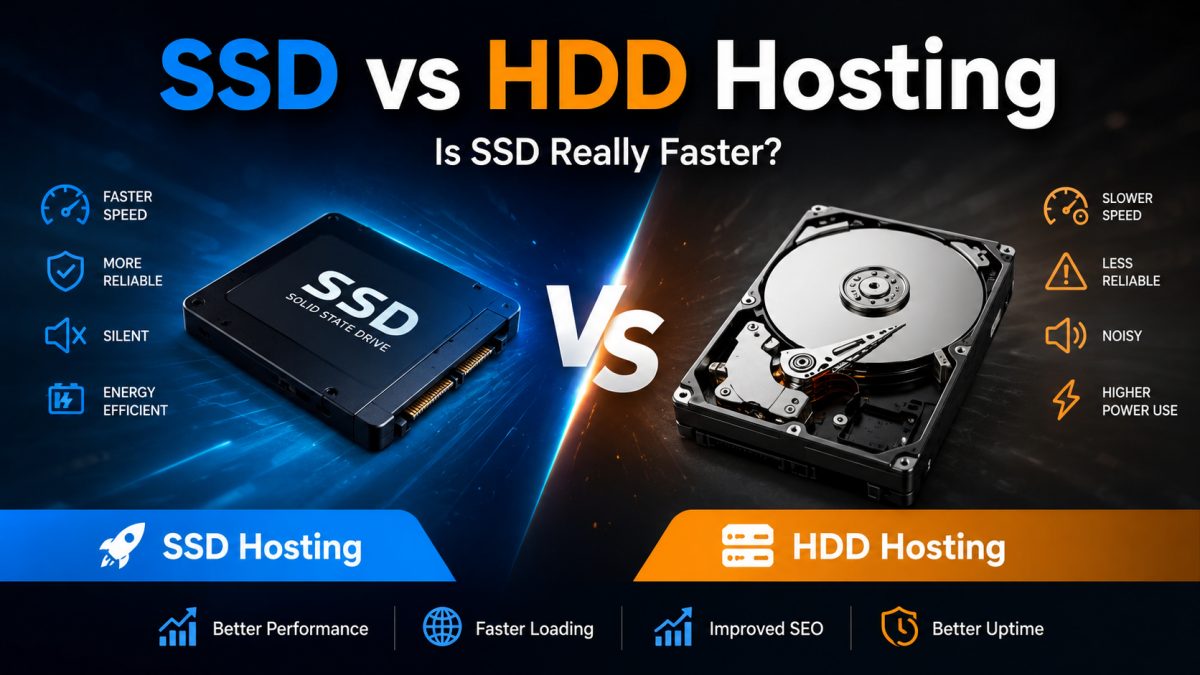
What Is SSD Hosting?
SSD stands for Solid State Drive.
Unlike traditional hard drives, SSDs use flash memory to store data. There are no moving parts, spinning disks, or mechanical read/write heads.
Think of SSDs like modern smartphone storage:
- Fast
- Efficient
- Quiet
- Reliable
SSD hosting means your website files, databases, emails, and applications are stored on SSD drives instead of older HDD technology.
What Is HDD Hosting?
HDD stands for Hard Disk Drive.
This is the traditional storage technology that has existed for decades.
HDDs work mechanically:
- Spinning magnetic disks store data
- A moving arm reads and writes information
- Physical movement is required for operations
👉 Imagine an old vinyl record player spinning constantly while trying to find data.
Because HDDs rely on mechanical movement, they are naturally slower than SSDs.
SSD vs HDD Hosting: The Core Difference
| Feature | SSD Hosting | HDD Hosting |
|---|---|---|
| Speed | Very Fast | Slower |
| Reliability | Higher | Lower |
| Noise | Silent | Mechanical Noise |
| Power Usage | Lower | Higher |
| Durability | Excellent | More vulnerable |
| Website Performance | Faster loading | Slower response times |
| Price | Slightly Higher | Cheaper |
Is SSD Hosting Really Faster?
Yes — dramatically faster.
This isn’t just marketing. SSD hosting delivers real-world performance improvements that affect:
- Website loading speed
- Database performance
- Server response times
- File transfers
- User experience
- SEO rankings
Depending on workload, SSDs can be several times faster than HDDs.
Why SSD Hosting Improves Website Speed
Every time someone visits your website, your hosting server must:
- Read files
- Load images
- Process databases
- Generate pages
- Deliver content
With HDD hosting, all these operations rely on moving mechanical parts.
With SSD hosting, data is accessed instantly through flash memory.
👉 Result: significantly faster website performance.
Real-World Example
Imagine two websites:
Website A (HDD Hosting)
- Loads in 4–5 seconds
- Occasional slowdowns
- Database queries take longer
Website B (SSD Hosting)
- Loads in 1–2 seconds
- Smoother performance
- Better user experience
Visitors immediately notice the difference.
Website Speed and User Experience
Modern internet users expect websites to load quickly.
If your site is slow:
- Visitors leave
- Bounce rate increases
- Conversions drop
- Trust decreases
Studies consistently show that even a 1-second delay can reduce conversions and engagement.
👉 Faster hosting directly improves user satisfaction.
SSD Hosting and SEO
Google officially considers website speed a ranking factor.
Faster websites typically enjoy:
- Better SEO rankings
- Lower bounce rates
- Higher engagement
- Improved Core Web Vitals
While SSD hosting alone won’t guarantee top rankings, it provides an important performance advantage.
Database Performance: Where SSD Really Shines
Modern websites rely heavily on databases.
Platforms like:
- WordPress
- PrestaShop
- OpenCart
- Drupal
- Joomla
constantly read and write database information.
SSD hosting dramatically improves:
- MySQL performance
- Dynamic page generation
- Admin dashboard speed
- Product searches
- Checkout systems
👉 This is especially important for eCommerce websites.
SSD Hosting for WordPress
WordPress websites benefit enormously from SSD hosting.
Why?
- WordPress constantly accesses databases
- Plugins increase file requests
- Themes load many assets
- Caching systems work better on fast storage
SSD hosting helps WordPress feel much more responsive.
SSD Hosting for eCommerce Stores
If you run an online store, SSD hosting is almost essential.
Stores process:
- Product searches
- User accounts
- Shopping carts
- Payments
- Inventory systems
All these operations rely heavily on storage performance.
Slow hosting can hurt:
- Sales
- Customer trust
- SEO
- Conversion rates
Reliability: SSD vs HDD
Another major advantage of SSD hosting is reliability.
HDD Problems
Because HDDs contain moving parts, they are more vulnerable to:
- Mechanical failure
- Wear and tear
- Heat damage
- Vibration issues
SSD Advantages
- No moving parts
- Less heat generation
- Lower failure risk
- Better long-term stability
👉 This contributes to better uptime and stability.
SSD Hosting and Uptime
Faster storage also improves uptime reliability.
Servers using SSDs:
- Recover faster
- Handle traffic spikes better
- Experience fewer hardware failures
If you read our guide about 99.9 uptime meaning, you already know how critical uptime is for websites and SEO.
Shared Hosting vs VPS: SSD Matters in Both
Shared Hosting
SSD storage improves:
- General responsiveness
- Loading times
- Website stability
VPS Hosting
SSD VPS hosting delivers:
- Faster virtualization
- Better database speed
- Improved server responsiveness
- Higher scalability
👉 SSDs are beneficial across all hosting types.
Can HDD Hosting Still Be Good?
Yes — in some cases.
HDD hosting may still work fine for:
- Very small websites
- Static HTML pages
- Archive storage
- Low-budget projects
However, modern websites increasingly demand SSD-level performance.
Why Cheap Hosting Often Uses HDDs
HDDs are cheaper.
Some budget providers still rely on outdated HDD infrastructure to reduce costs.
But the downside is:
- Slower websites
- Poorer user experience
- Lower reliability
- Worse scalability
👉 Cheap hosting often becomes expensive in lost traffic and performance.
How to Know if Your Hosting Uses SSD
Most providers clearly advertise SSD hosting because it’s now considered a premium feature.
Look for terms like:
- SSD Hosting
- NVMe SSD
- All-SSD infrastructure
- Flash storage
NVMe SSDs are even faster than standard SATA SSDs.
SSD vs NVMe SSD
Not all SSDs are identical.
Standard SSD
- Very fast
- Huge improvement over HDD
NVMe SSD
- Even lower latency
- Higher throughput
- Enterprise-grade speed
NVMe hosting is becoming increasingly popular among premium hosting providers.
How SSD Hosting Helps During Traffic Spikes
Traffic spikes are dangerous for slow servers.
SSD hosting handles high traffic much better because:
- Data access is faster
- Database operations scale better
- Caching systems work more efficiently
👉 This is especially important for:
- Online stores
- Viral content
- Black Friday sales
- Ad campaigns
Environmental Benefits of SSD Hosting
SSDs also use less electricity.
Benefits include:
- Lower energy consumption
- Reduced heat generation
- Improved efficiency
This helps data centers operate more efficiently.
Does SSD Hosting Cost More?
Usually, yes — but the price difference today is much smaller than it used to be.
And considering the performance improvements, SSD hosting delivers excellent value.
For most modern websites, SSD hosting is absolutely worth it.
Who Should Choose SSD Hosting?
Recommended For:
- WordPress websites
- Online stores
- Business websites
- Blogs
- High-traffic websites
- Developers
- Agencies
Not Necessary For:
- Tiny static websites
- Temporary test projects
Why AsterHost Uses SSD Infrastructure
At AsterHost, performance and reliability are priorities.
That’s why our hosting platform uses fast SSD-powered infrastructure designed for:
- Better website speed
- Stable uptime
- Faster databases
- Improved user experience
- Reliable performance
Whether you're hosting a simple blog or a growing eCommerce store, SSD hosting helps your website perform at its best.
Final Verdict: Is SSD Hosting Worth It?
Absolutely.
When comparing SSD vs HDD hosting, SSD technology clearly wins in:
- Speed
- Reliability
- Performance
- SEO benefits
- User experience
- Scalability
HDD hosting still exists, but SSD hosting has become the modern standard for serious websites.
If your website matters to your business, audience, or brand — SSD hosting is one of the smartest investments you can make.
Ready for Faster Hosting?
👉 Explore AsterHost SSD Hosting Solutions and experience faster, more reliable web hosting today.
Best Web Hosting https://besthostingcom.duoservers.com/ Shared Hosting, VPS Hosting, Dedicated Servers
Tags: fast hosting, hdd hosting, hosting comparison, nvme hosting, ssd hosting, ssd hosting benefits, ssd vs hdd hosting, web hosting speed, website performance


